![[DEV] MN Catholic Conference](https://assets.nationbuilder.com/themes/65df773c6ffa600228371ffb/attachments/original/1709322834/logo.png?1709322834)
Minnesota Catholic Conference Legislative Chaplain
A Goodwill Ambassador of the Catholic Church to the Minnesota State Government
Like any other area of society, the political arena is a mission field. Elected officials and their staff encounter a wide range of issues during their day, on which they are asked to deliberate, endorse, and/or vote. Legislators are often also away from their homes, families, and parish communities. The Church has a duty to minister to them.
The Minnesota Catholic Conference is pleased to be able to offer a Catholic Chaplain to the Minnesota State Government. The Chaplain will assist by (1) serving as a spiritual resource to legislators, the Administration, and staff; 2) being present to them during the legislative session; and 3) coordinating religious activities for Catholics serving at the Capitol (open to all) including bible studies, Catholic social teaching formation opportunities, and times of prayer. The chaplain also provides spiritual sustenance to Minnesota Catholic Conference staff as requested.
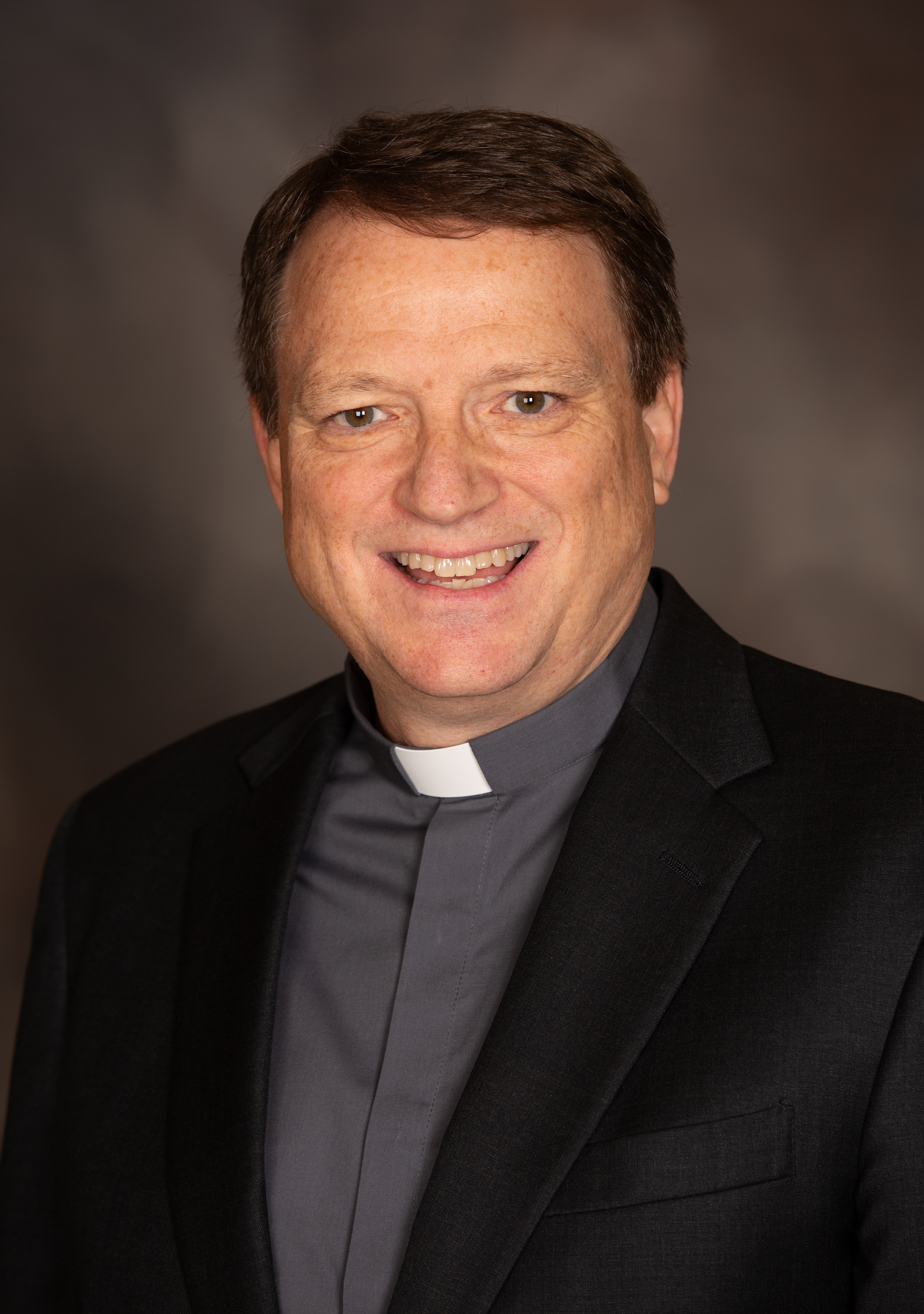
Meet Deacon Kevin Conneely
"I am excited to serve as the first Chaplain at the Minnesota Catholic Conference. The role will initially entail praying with and for legislators and all those who serve at the Capitol, accompanying them as individuals on their faith journey, and planning events and visits from Catholics across the state to experience the important and difficult work being done in Saint Paul. I feel blessed and hopeful by this opportunity to serve God's Church in this way. Please keep me and all those serving at the state's Capitol in your prayers."
Conneely was ordained to the permanent diaconate in 2023. He and his wife have two adult daughters and reside in Minneapolis. They are parishioners of Annunciation Catholic Church where he also serves as deacon. With a background as an attorney he also currently serves as Director of the Diaconate for the Archdiocese of St. Paul and Minneapolis.To contact Deacon Conneely directly for Chaplain services, please email him directly at [email protected]
How this assignment works:
Chaplains receive a three-year appointment by their bishop, and there is no legislative advocacy involved in the role of chaplain. The Chaplain will keep confidential all private conversations with legislators and staff, and will not share those with MCC staff. Whether the chaplain is a deacon or a priest, conversations will be treated as if they were heard in the confessional.
"The Eight Beatitudes of the Politician" by Cardinal Van Thuan
- Blessed the politician who has a high knowledge and a deep consciousness of his role. The Second Vatican Council defined politics as a “difficult, but at the same time, very noble art” (Gaudium et Spes, 75). Midst in the phenomenon of globalization, such a claim is still true: to the weakness and fragility of the global economic mechanisms it can only be responded with the force of a global policy based on globally shared values.
- Blessed the politician who personally exemplifies credibility. Today, scandals in the world of politics do multiply and so reduce the reliability of its protagonists. To overturn this situation, we need a strong response, a response which implies reform and purification in order to rehabilitate the image of the politician.
- Blessed the politician who works for the common good and not for his own sake. In order to live this beatitude, the politician should ask his conscience and question himself: am I working for my people or for myself? Am I working for my country, for the culture? Am I working in order to honour morality? Am I working for mankind?
- Blessed the politician who remains coherent. There is a need of coherence between his faith and his life as a person engaged in politics, of a determined coherence between his words and his actions, of a coherence which honours and respects the electoral promises.
- Blessed the politician who works for unity. And, making Jesus the fulcrum of unity, thus defends it. Because division is self - destruction.
- Blessed the politician who works for the realization of a radical change. This change shall occur by fighting against the intellectual perversion, by refusing to call good that which is evil, by not confining religion to the private sphere, by establishing the priorities of one’s own choices on the basis of faith. There is only one “Magna Charta”: the Gospel.
- Blessed the politician who is able to listen. Who listens to the people before, during and after the elections; who listens to his conscience; and who listens to God in prayer. His activity will so achieve certainty, reliability and effectiveness.
- Blessed the politician who has no fear. No fear first of all “of the truth”. “Truth”, tells us Pope Paul John II, “does not need votes!”. And blessed the politician who has no fear of the mass media, because at the time of judgment he will answer only to God, not to the media!