![[DEV] MN Catholic Conference](https://assets.nationbuilder.com/themes/65df773c6ffa600228371ffb/attachments/original/1709322834/logo.png?1709322834)
The Catholic Spirit: MCC on the Legislature: Partisan divides, gun violence, immigration enforcement
As the Minnesota Legislature begins the second half of its 94th legislative session Feb. 17, Jason Adkins, executive director and general counsel of the Minnesota Catholic Conference (MCC), and Maggee Hangge, MCC’s assistant director for operations and family policy, discuss some of the challenges and opportunities ahead.
The first half of the conversation appears below, addressing the political makeup of the Legislature, gun violence and federal immigration enforcement efforts in Minnesota. Watch for the March 5 edition of The Catholic Spirit to read the second half, with a focus on suspected fraud in Minnesota social services programs, a promising school-choice federal tax credit, voter involvement in the Feb. 3 precinct caucuses and efforts to defeat proposals that would legalize online gambling and assisted suicide. The entire conversation can be heard online as a TCS Podcast at TheCatholicSpirit.com. The conversation has been edited for clarity and length.
Q: Jason and Maggie, thank you for inviting us to the MCC. As we look at the legislative session that runs through mid-May, I note that in the Minnesota Senate, Democrats hold a one seat majority heading into the November midterm elections. The House is evenly split. Voters will cast ballots to fill all 67 Senate seats and all 134 House seats. How might this color legislative action in the coming months?
Adkins: I think the main thing to keep in mind is that when the Minnesota Catholic Conference goes to the Capitol, the policies that we work on are rooted in principles, and those principles don’t change. So regardless of partisan dynamics, we’re always working for human dignity and the common good. We have to be attentive to political dynamics, but at the same time not dependent upon them. We want to work in a way that any legislative outcome is not dependent on specific election results.
Q: The split, though; it’s very interesting. I wonder if that will be maintained. We also have a lame duck governor as Gov. Tim Walz will not be seeking reelection for a third term. How might that impact what actually gets done in this coming session?
Adkins: With the (anticipated) retirements of many legislators in this cycle, we could see a third, and (even) half, of our legislators stepping down. So, there’s going to be massive turnover. Whether that means people will be checked out and wanting to move on or whether they’ll feel like they’re pressured to get something done, that remains to be seen. I think it’s going to vary depending on the legislator, depending on the committee.
But certainly, we are in for a tumultuous legislative cycle where it will be challenging to get things done because of those splits. But we’re also hopeful that people will say Minnesota is in a very difficult time right now, and we need to put partisanship aside: “I’m stepping away from the Legislature; I’m not running for election; my responsibilities are to my constituents and the people of Minnesota. Therefore, we’re going to put those egos and some of those things about politics that we don’t like aside and work together to build common ground for the common good.” Maggee, what would you add to that?
Hangge: I think that’s right. We’ve had lots of conversations with legislators already in the House who are really eager to actually get something done and want to compromise and work across the aisle. Especially in the split they had their first year — last year — having to kind of figure it out. But now that they have a rhythm, some of the legislators that we talked with are really excited about that. I’m excited to see how that plays out.
Q: I am struck as well, and you mentioned this briefly here, Jason, by the societal pressures that have been bearing down on Minnesota and certainly on our lawmakers since the Aug. 27 shooting during an all-school mass at Annunciation in Minneapolis. That, for example, prompted Walz to urge a special session on gun control that was never called. Might other legislative proposals be in the works to address the purchase and use of guns that lawmakers might seriously consider and MCC back?
Adkins: That’s a great example of lawmakers and statesmen (needing) to step forward to bring solutions that transcend the partisan divides. It can’t be a “heads I win, tails you lose” mindset and expect results in this kind of legislative environment. We need people who are willing to work together and come up with real solutions that transcend those partisan divides. And it’s been our view and stated position from the beginning that we need comprehensive, all-of-the-above approaches to protecting kids from gun violence.
We’re continuing that advocacy with a legislative package that includes three major pieces that we’re hoping can, again, bridge those partisan gaps and transcend those divides. One being a ban on high-capacity magazines to limit the amount of killing that can be done in a mass shooting. That’s something 14 other states already have in place. And we think that’s one of the ways in which we can try to build common ground around sensible gun violence policies.
The second piece is better measures in school safety funding that protects all kids, not just kids in certain types of schools, but also kids in charter, tribal and nonpublic schools as well, and make that consistent funding that schools can rely upon on a per pupil basis.
And then the third piece, which is something that we’re really, really excited about, is to stop the harm of addictive social media. We’re working on something that really has legislators excited and optimistic to address the ways in which social media can encourage and foment mass violence.
Hangge: We’re helping spearhead this piece of legislation. We call it “shazam:” stopping the harms of addictive social media (SHASM). It helps put parents back in the driver’s seat when it comes to their kids’ online use.
We know that kids are online so much. One in five Minnesota students — 20% of our kids — are online in the middle of the night, five nights a week. Parents need help. They don’t know how to handle this. And kids know how to get around the current safeguards and controls. We know that the stats show the mental health impacts for the kids, too.
The legislation puts parents back in the driver’s seat. They can give consent for their kids to be on the platform. And if they’re on the platform, then that experience has to look different, taking away some of the most addictive features so they can just see their friends’ content and get away from some things like ad targeting and infinite scroll. It also gives more capabilities on the parents’ side.
...
Read the full interview at The Catholic Spirit.
Letter Concerning Immigration Enforcement in Schools
PDF Version Hon. Sydney [email protected] Hon. Peggy [email protected] RE: Immigration Enforcemen...
Continue reading…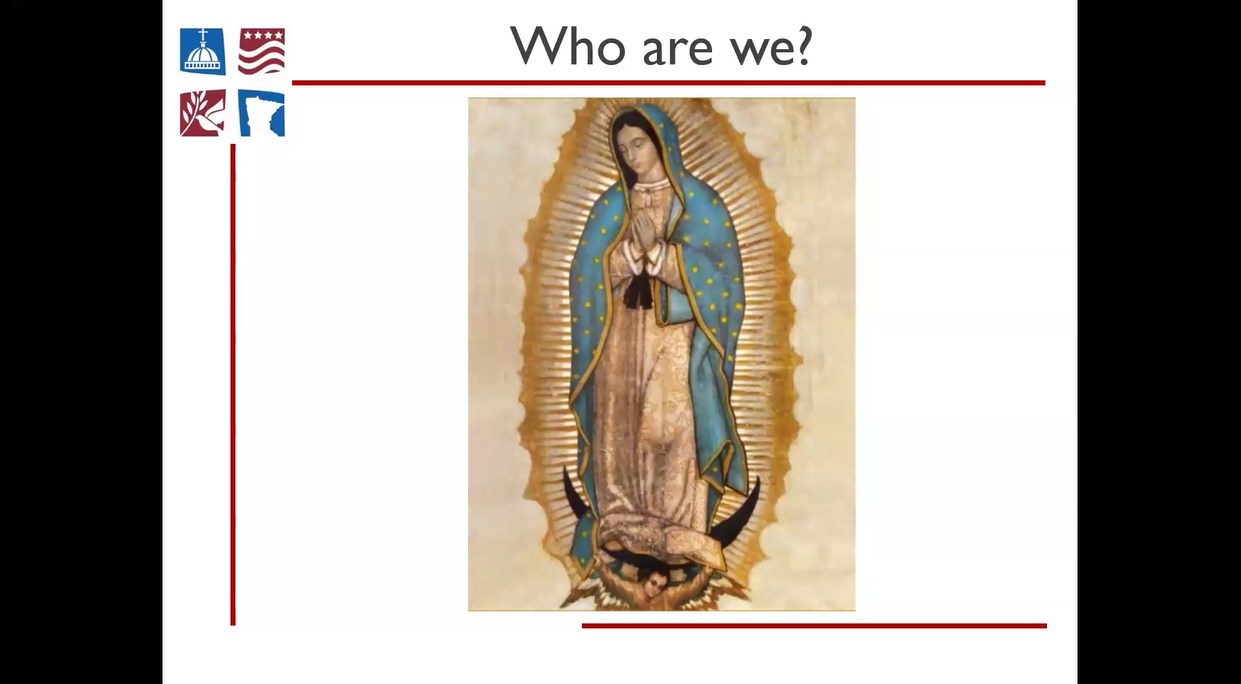
Gathering Guadalupe's Flowers - Immigration and Catholic Social Teaching Presentation for St. Mary's University
As part of the University of Mary's Inclusion & Human Dignity Week, January 19-23, 2026, Minnesota Catholic Conference Executive Dire...
Continue reading…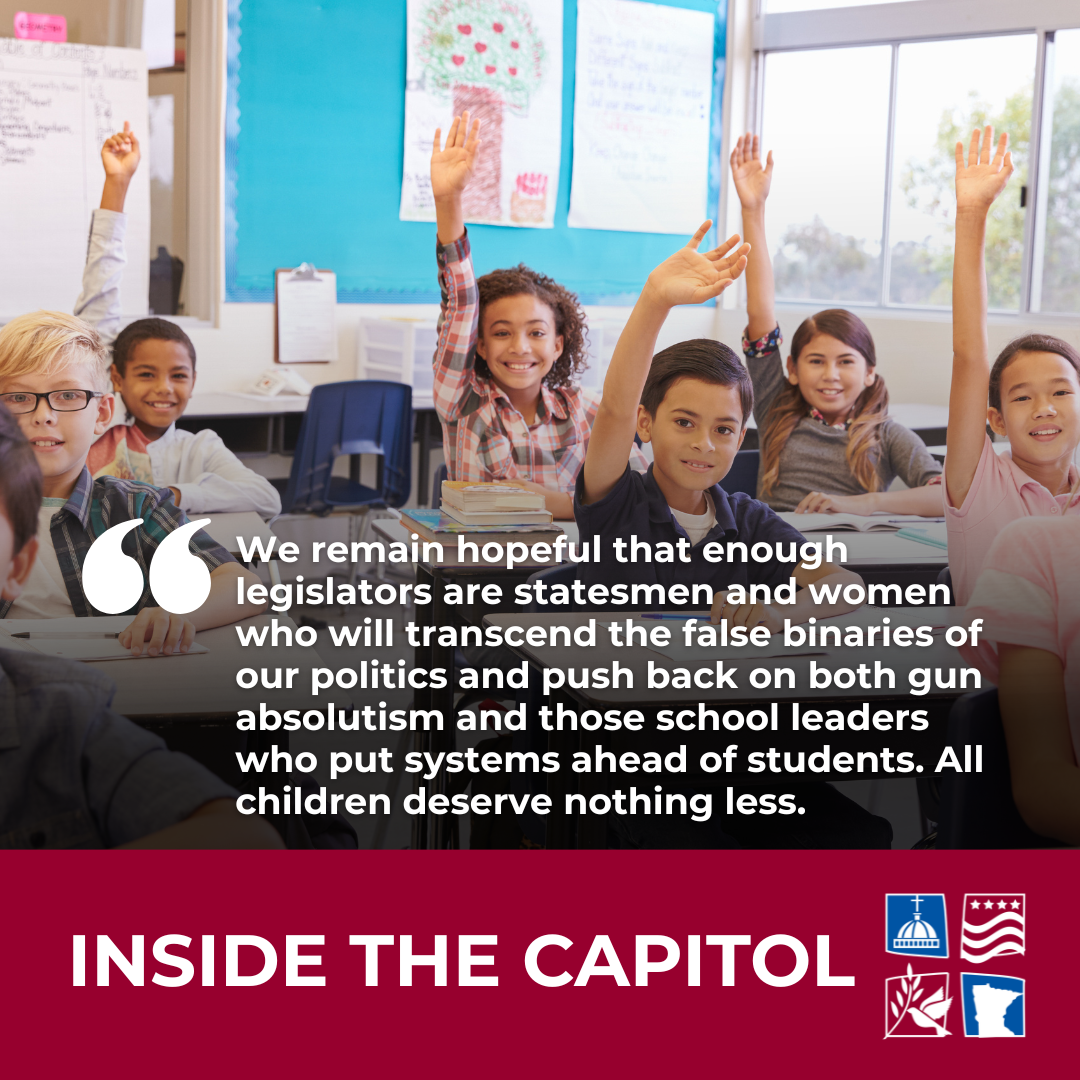
Protecting children from gun violence has multiple elements
After the tragic shooting at Annunciation Catholic Church and School in Minneapolis last year, it is understandable to have passion and r...
Continue reading…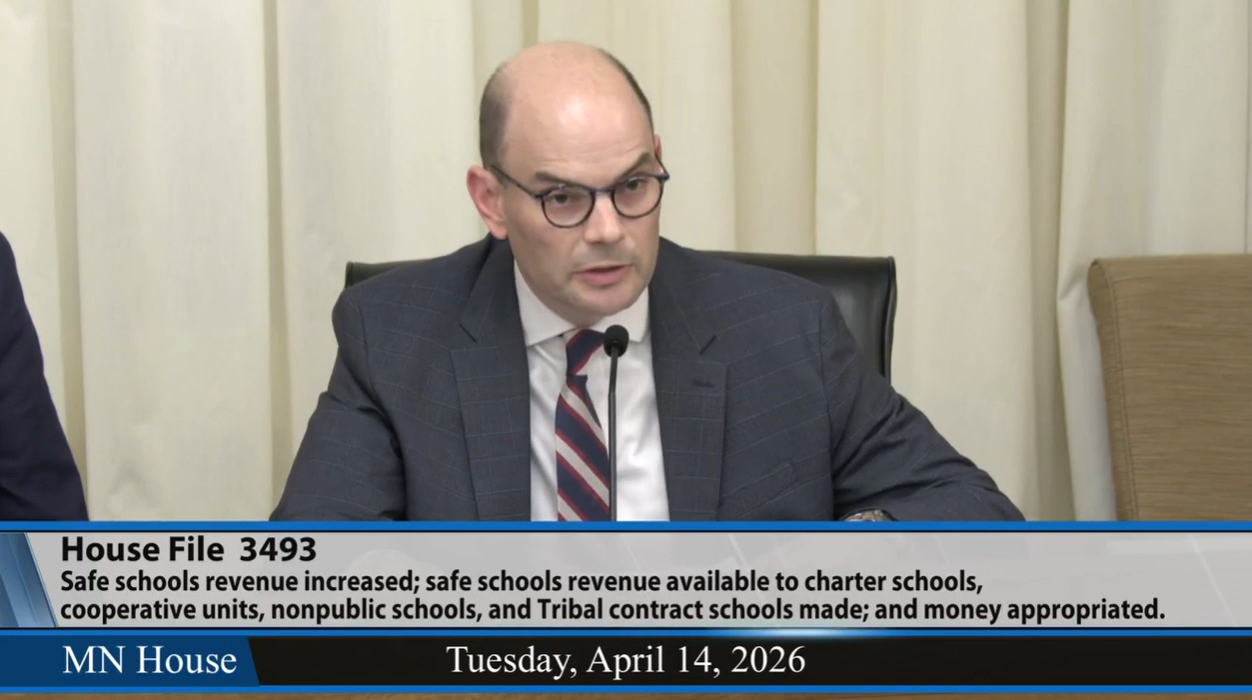
Testimony to House Education Finance Committee in Support of Safe Schools Legislation
Jason Adkins, Executive Director of the Minnesota Catholic Conference testifies before the House Education Finance Committee in support ...
Continue reading…